
How Small Businesses Can Start Exporting from Sacramento
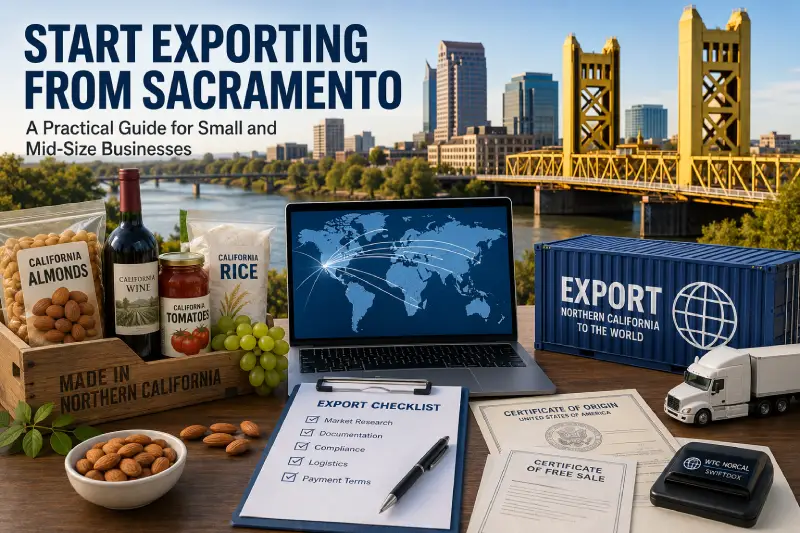
The Sacramento region produces goods that the world buys: almonds, tomatoes, rice, wine, technology components, processed foods, and industrial equipment. And yet a significant portion of the small and mid-size businesses in and around Sacramento that make or source these products sell exclusively to domestic buyers. The barriers that keep them domestic are mostly perceived, not real. Documentation is manageable. Market entry is a step-by-step process. And the infrastructure to support exporting from Northern California is closer than most Sacramento business owners realize.
This guide walks through what it actually takes for a small business to start exporting from Sacramento, from assessing whether a product is export-ready to understanding the documentation process and accessing local export support resources.
Why Sacramento Is A Strong Base For Exporting
Location matters in international trade. Sacramento’s position in the Central Valley places it within 90 miles of the Port of Oakland, one of the busiest container ports on the West Coast and the primary gateway for Pacific Rim trade lanes connecting to Asia, Southeast Asia, and beyond. Agricultural exports from Sacramento-area processors and growers regularly move through Oakland to markets in Japan, China, South Korea, and Taiwan. The geographic advantage is significant, and it is underutilized by many smaller regional businesses.
Sacramento’s Export Economy
Northern California exports span multiple sectors. Agricultural products, including nuts, fresh and processed fruits and vegetables, dairy, rice, and wine, make up a large share of the region’s international trade. Sacramento also exports technology goods, industrial machinery, electrical equipment, and specialty processed foods. For small businesses in these sectors, the question is rarely whether there is international demand for what they make. The question is whether they have the systems to get it there reliably and compliantly.
Trade Resources Available Locally
WTC Northern California, headquartered in Sacramento, exists specifically to help Northern California companies develop and grow their international business. This is not a passive resource. WTC NorCal provides trade advisory services, export documentation issuance, access to a global network of World Trade Centers in more than 100 countries, and export education programming. Sacramento-area businesses that have not worked with WTC NorCal are often surprised to find that sophisticated international trade support is available locally, without needing to engage an out-of-state consultant.
The First Steps To Start Exporting From Sacramento
Step 1: Determine If Your Product Is Export-Ready
Export-readiness is about more than whether someone in another country wants to buy your product. It is about whether your business can supply it reliably at the quantities, consistency, and lead times an international buyer expects, whether the product meets the regulatory requirements of the target market, and whether your pricing structure works when international shipping costs, tariffs, and importer margins are factored in. Many first-time exporters discover that their margins are tighter than expected once the full cost of getting goods to a foreign buyer is calculated. Running this analysis before committing to an international buyer is essential.
Step 2: Identify Your Target Market
Not every international market makes sense for every product. Market selection should start with data, not intuition. The US Department of Commerce’s market intelligence tools, California’s international trade office data, and WTC NorCal‘s trade advisory resources can help identify which markets have demonstrated demand for your product category, what tariff rates apply, and whether any trade agreements create cost advantages for specific destinations.
Starting with one or two target markets rather than attempting a broad international launch is the approach that works for most small businesses. Focus limits the documentation complexity, the regulatory compliance research, and the logistics management to a manageable scope while you build the systems that make exporting repeatable.
Step 3: Understand Your Export Documentation Requirements
Every international shipment requires a baseline set of documents, and many product categories and destination markets require additional documentation. For Sacramento agricultural exporters, phytosanitary certificates from USDA APHIS are standard. For food and health product exporters, certificates of free sale and sometimes GMP certificates are required by many import markets. A certificate of origin is required for most shipments and is the key to claiming preferential tariff rates under US trade agreements.
Getting documentation right before the first shipment departs is far less expensive than resolving a customs hold after it arrives. WTC Northern California issues certificates of origin, certificates of free sale, and other export documentation digitally through the Swiftdox platform, with most documents available within one business day.
Common Mistakes Small Businesses Make When Starting To Export
First-time exporters from Sacramento and across Northern California tend to make a predictable set of errors. Knowing what they are is the cheapest way to avoid them.
Skipping market research and going directly to a buyer referral is common. Having a connection in a foreign market is not the same as having a verified export strategy. One buyer relationship is not market validation, and building an export program around a single customer creates fragility from the start.
Underestimating documentation lead times is another consistent problem. If a certificate of free sale, a GMP certificate, or an FDA Certificate to Foreign Government is part of your export package, and you find out two days before the shipment leaves, you have a problem. Build documentation procurement into your production and shipping schedule, not as an afterthought.
Ignoring Incoterms when negotiating with international buyers creates pricing and liability confusion. Who pays for freight? Who insures the goods? Who handles import customs clearance? Incoterms define these responsibilities, and misunderstanding them leads to disputes and unexpected costs that make the transaction unprofitable.
Operating without a customs broker is feasible for simple, low-value shipments, but for most Sacramento small businesses building a real export program, working with a licensed customs broker reduces error rates and saves time. The cost is typically modest relative to the value of the shipment.
Pricing for export without accounting for all costs, including freight, insurance, tariffs, import duties, and importer margin, is a math error that becomes apparent only after the deal is done and the margin is gone. Export pricing requires a different calculation than domestic pricing, and getting it right before negotiations start protects the business.

What Export Support Is Available In Northern California?
The support infrastructure for Sacramento exporters is more extensive than most small business owners realize. Using it costs little to nothing and can materially accelerate how quickly an export program becomes operational and profitable.
WTC Northern California
WTC Northern California provides export documentation services, trade advisory support, global business connections through the World Trade Centers network, and export education programming for members and regional businesses. The organization’s Swiftdox platform processes certificates of origin, certificates of free sale, and other export documents digitally, eliminating the delays associated with paper-based processing. Trade specialists at WTC NorCal have direct experience with the documentation and compliance requirements for the Pacific Rim markets that Sacramento exporters most commonly target.
SBA Export Programs
The US Small Business Administration offers several programs specifically designed for export-ready small businesses. The Export Express loan program provides working capital for export-related expenses. The International Trade loan program supports small businesses that need to expand to compete with imports or start exporting. The SBA also funds Small Business Development Centers (SBDCs) that provide no-cost export advisory services. The Northern California SBDC network serves Sacramento-area businesses and can connect business owners with international trade advisors at no charge.
US Commercial Service
The US Commercial Service, a division of the Department of Commerce, maintains offices throughout Northern California and provides market intelligence, trade leads, business matchmaking services, and due diligence on foreign partners. Sacramento businesses can access US Commercial Service support to identify buyers in target markets, vet potential distributors, and get country-specific regulatory guidance before committing to a market entry strategy.
How Export Documentation Works For Sacramento Businesses
The practical process of getting export documents in Sacramento is more straightforward than the list of required documents might suggest. For most shipments, a Sacramento exporter needs a commercial invoice, a packing list, an Electronic Export Information filing through the ACE system, and a certificate of origin, a certificate of free sale, or sector-specific documents like a phytosanitary certificate, depending on the product and destination.
WTC Northern California handles the document-based certifications digitally. Sacramento businesses submit applications through the Swiftdox platform online, upload supporting materials, and receive certified documents typically within one business day. There is no requirement to visit a Sacramento office. Members of WTC Northern California pay reduced rates on all export documentation. For businesses with regular export activity, the cost savings on certificates of origin and certificates of free sale alone typically cover a significant portion of the membership cost in the first year.
Frequently Asked Questions About Exporting From Sacramento
How do I start exporting from Sacramento?
- Start by assessing whether your product is export-ready in terms of supply capacity, regulatory compliance, and pricing margin. Then identify one or two target markets using trade data and US Department of Commerce resources. Next, work with a trade specialist, such as those at WTC Northern California, to identify the documentation requirements for your product and destination before your first shipment.
What export resources are available in Northern California?
- Northern California exporters can access trade advisory support through WTC Northern California, no-cost export consulting through the SBDC network, market intelligence and trade match services through the US Commercial Service, and SBA export financing programs. These resources are available to small and mid-size businesses throughout the Sacramento region.
Do Sacramento businesses have access to the Port of Oakland?
- Yes. Sacramento is located approximately 80 miles from the Port of Oakland, the primary West Coast port for Northern California exports. Most Sacramento-area exporters route ocean freight through Oakland. Full truckload and LTL trucking services connect Sacramento warehouses and distribution facilities directly to Oakland’s container terminals.
What documents do I need to export from Sacramento?
- Most Sacramento exports require a commercial invoice, packing list, bill of lading, and EEI filing. Product-specific and destination-specific documents may include a certificate of origin, certificate of free sale, phytosanitary certificate, or GMP certificate. WTC Northern California can issue most of these digitally through the Swiftdox platform.
What products does Sacramento export internationally?
- Sacramento and the Northern California region export significant quantities of agricultural products, including almonds, rice, tomatoes, wine, and processed foods, along with technology goods, industrial equipment, and manufactured products. The Central Valley’s agricultural output makes Northern California one of the most active agricultural export regions in the United States.