
Why Northern California Is a Growing Hub for International Trade
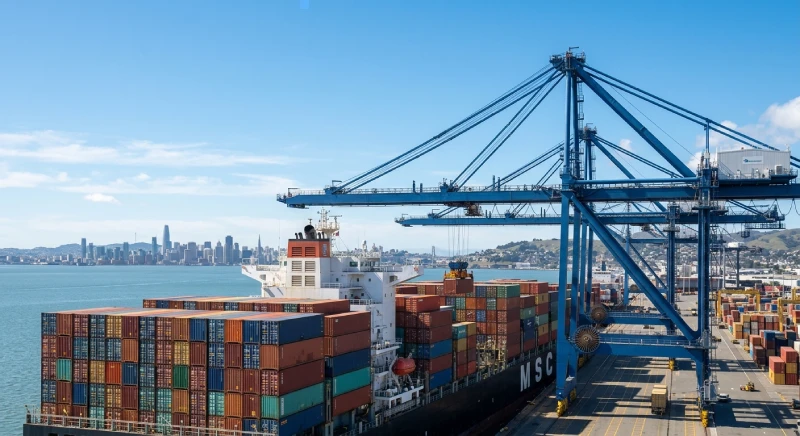
Northern California is not typically the first region that comes to mind when people think about American exports. That association usually goes to major port cities or industrial states. But the numbers tell a different story. Northern California, defined broadly as the region from the Bay Area through the Sacramento Valley and the Central Valley, generates billions of dollars in annual exports across agricultural products, technology goods, food processing, and industrial equipment. The combination of Pacific Rim port access, sector diversity, and a developed trade support infrastructure makes this one of the most active international trade regions in the country.
NORTHERN CALIFORNIA’S TRADE GEOGRAPHY
Geography is the foundation of Northern California’s trade position. The region sits on the eastern edge of the Pacific Rim trade corridor, with the Port of Oakland providing direct container shipping access to Japan, China, South Korea, Taiwan, Southeast Asia, and Australia. For agricultural and food processors in the Sacramento Valley and Central Valley, Oakland is the primary export gateway, positioned within 80 to 120 miles of most production centers in the region.
Port of Oakland and Pacific Rim Access
The Port of Oakland is the fifth-busiest container port in the United States and handles the vast majority of Northern California’s export volume. Its position on San Francisco Bay gives it direct access to Pacific Rim shipping lanes. Agricultural exports, including almonds, walnuts, wine, rice, and processed foods, move through Oakland to Japan, China, South Korea, and Taiwan consistently. Technology goods and electronic components from the Bay Area route through Oakland as well, often in combination with air freight for higher-value, time-sensitive shipments.
Sacramento as an Inland Trade Hub
Sacramento occupies a central position in the Northern California trade geography that is more significant than its port-city neighbors typically acknowledge. As the state capital and a regional commercial center, Sacramento is home to the World Trade Center Northern California, the regional SBDC network, California trade offices, and the international trade operations of several of the state’s largest agricultural producers and processors. The city’s road and rail connections to Oakland, the Central Valley, and Nevada make it a natural coordination point for export logistics across the region and a pillar to small businesses to export their goods.
Air Freight via SFO and SMF
San Francisco International Airport (SFO) handles significant volumes of high-value air freight, particularly technology components, medical devices, and perishable premium food products. Sacramento International Airport (SMF) has grown its air cargo capacity in recent years. For Northern California exporters shipping time-sensitive or high-value goods to markets where speed matters more than per-unit freight cost, SFO air connections to Tokyo, Hong Kong, Seoul, and Taipei are a regular part of the logistics calculation.
KEY EXPORT SECTORS IN NORTHERN CALIFORNIA
Agriculture: Central Valley to the World
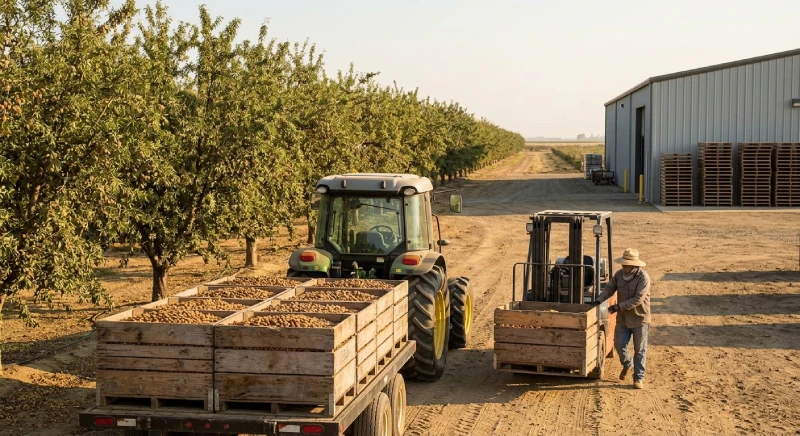
The Central Valley is one of the most productive agricultural regions on earth, and a substantial portion of its output is exported. California almonds, grown almost exclusively in the state, are the single largest tree nut export in the world, with the majority going to markets in Europe, India, Southeast Asia, and China. California walnuts, pistachios, tomato products, wine, dried fruits, and fresh citrus are all major export categories. The Sacramento Valley alone exports hundreds of millions of dollars in rice annually, primarily to Japan and South Korea under the terms of US trade agreements.
For agricultural exporters in this region, phytosanitary documentation, certificates of origin, and in many markets certificates of free sale are standard parts of the export documentation package. The frequency and scale of agricultural export from Northern California has created a well-developed trade services infrastructure that supports producers of all sizes.
Technology: Bay Area Exports and IP-Intensive Goods
The Bay Area’s technology sector generates a different category of international trade than most people visualize when they think about exports. Beyond physical hardware, Silicon Valley companies export software licenses, semiconductor designs, consulting services, and intellectual property that generates royalties from international licensees, all of which count as exports under US trade statistics. Physical exports include semiconductors and electronic components, medical devices, scientific instruments, and advanced manufacturing equipment. These goods move in smaller volumes but higher values than agricultural commodities, and they often face more complex export documentation requirements, particularly when export controls under the Export Administration Regulations apply.
Food and Beverage Processing
California’s food and beverage processing industry bridges agriculture and manufacturing. Wine produced in Napa, Sonoma, the Sierra Foothills, and the Central Valley is exported to over 100 countries. Packaged nuts, specialty foods, organic products, and functional food and beverage brands have established significant international distribution across Asia, the Middle East, and Europe. For food and beverage exporters, certificates of free sale are frequently required by destination market import authorities before products can be registered for distribution, and GMP documentation is increasingly expected alongside them for health-adjacent food categories.
Industrial and Manufacturing Equipment
The Sacramento region and the broader Northern California manufacturing base export specialized industrial equipment, water management and agricultural technology, construction equipment, and environmental technology products. Many of these goods require export classification review under the Commerce Control List, particularly when they have dual-use technology implications or are destined for markets subject to US export licensing requirements.
THE NORTHERN CALIFORNIA TRADE COMMUNITY
What gives Northern California its competitive advantage in international trade is not just its geography or its sectors. It is the density of the trade support community available to businesses in the region.
WTC Northern California, headquartered in Sacramento, is the anchor institution for export documentation, trade advisory services, and global network access in the region. Its Swiftdox platform issues certificates of origin, certificates of free sale, and GMP certificates digitally, with most applications processed within one business day. WTC NorCal’s membership in the World Trade Centers Association connects Northern California businesses to a network of World Trade Centers in more than 100 countries, providing introductions to buyers, distributors, and trade officials in target markets.
The US Commercial Service maintains offices in Northern California that provide market research, trade leads, and Gold Key business matchmaking in foreign markets. The Northern California SBDC network provides no-cost export advising to small businesses. The California Department of Food and Agriculture and the state’s international trade offices provide sector-specific export support, particularly for agricultural producers navigating foreign market registration processes.
TRADE RELATIONSHIPS AND KEY MARKETS
The Asia Pacific region is Northern California’s most important trading partner by volume. Japan, China, South Korea, Taiwan, Hong Kong, and Southeast Asian markets collectively absorb the largest share of the region’s agricultural, food and beverage, and technology exports. Trade relationships with Japan and South Korea are facilitated by US free trade agreements that create preferential tariff conditions for qualifying goods, a meaningful advantage for agricultural exporters who take the time to obtain the required certificates of origin with the correct preference criteria.
Canada and Mexico, as USMCA partners, are major markets for Northern California food and beverage, technology, and industrial goods. USMCA preferential tariff benefits require proper documentation, specifically, a USMCA-compliant certificate of origin or producer certification, which Northern California exporters can obtain through WTC NorCal.
The European Union represents a growing market for California wine, specialty foods, technology products, and medical devices. EU import requirements are complex and vary significantly by product category, but Northern California’s trade support infrastructure has extensive experience navigating EU market entry for food, cosmetics, and health products in particular.
HOW NORTHERN CALIFORNIA BUSINESSES CAN ACCESS TRADE SUPPORT
For businesses in Sacramento, the Bay Area, or anywhere in the Northern California region that are building or expanding international operations, WTC Northern California is the logical first contact. WTC NorCal provides export documentation issuance, trade advisory services on a membership basis, access to the global WTC network, and export education programming throughout the year.
Membership in WTC Northern California opens access to reduced rates on all export documentation, direct introductions to World Trade Centers in target markets, and ongoing advisory support for trade compliance, documentation, and market entry questions. For businesses exporting regularly, the operational support alone justifies the investment. Contact WTC Northern California at (916) 447-9827 or through the website to learn about membership and current programs.
FREQUENTLY ASKED QUESTIONS ABOUT NORTHERN CALIFORNIA INTERNATIONAL TRADE
- What are the main exports from Northern California? – Northern California’s main exports include agricultural products (almonds, walnuts, rice, wine, fresh produce), technology goods and semiconductors from the Bay Area, processed food and beverage products, medical devices, and industrial and manufacturing equipment. The region’s export economy is among the most diverse in the United States, with strong trade flows to Asia Pacific, Canada, Mexico, and Europe.
- What is the role of the Port of Oakland in Northern California trade? – The Port of Oakland is the primary export gateway for Northern California, handling the majority of the region’s container export volume. It is the fifth-busiest container port in the United States and provides direct shipping access to Pacific Rim markets. Most Northern California agricultural exports, including almonds, rice, wine, and processed foods, ship through Oakland.
- What trade support is available for Northern California exporters? – Northern California exporters have access to trade advisory services and export documentation through WTC Northern California, market research and business matchmaking through the US Commercial Service, no-cost export consulting through the SBDC network, and sector-specific support through California state trade offices. These resources collectively serve businesses from startup exporters to established international operators.
- What export documents do Northern California businesses typically need? – The standard export documentation package for Northern California businesses includes a commercial invoice, packing list, bill of lading or airway bill, and EEI filing. Destination-specific documents such as certificates of origin, certificates of free sale, phytosanitary certificates (for agricultural products), and GMP certificates are required depending on the product category and destination market.
- How does WTC Northern California support exporters in Sacramento and the Bay Area? – WTC Northern California provides export documentation certification (certificates of origin, certificates of free sale, GMP certificates), trade advisory support, global business introductions through the World Trade Centers network in 100+ countries, and export education programming for businesses throughout Northern California. The organization is headquartered in Sacramento and serves exporters across the entire region.